

No, National Debt Relief is not a scam, but it’s not for everyone. It’s a legitimate company that negotiates with creditors to reduce unsecured debt, such as credit cards or medical bills. However, the process can harm your credit score, take years to complete, and involve fees based on the original debt amount. Here’s what you need to know:
- How It Works: You stop paying creditors and deposit money into a dedicated account. The company uses this to negotiate settlements for less than what you owe.
- Eligibility: You must have at least $7,500 in unsecured debt and prove financial hardship.
- Costs: Fees are charged only after a debt is settled but can range from 15-25% of the enrolled debt.
- Risks: Creditors may still contact you, sue you, or report missed payments, impacting your credit score. Forgiven debt may also be taxable.
While some customers report positive outcomes, others face challenges like slow timelines, inconsistent service, and ongoing creditor harassment. Always research thoroughly, review contracts, and consider alternatives like credit counseling or bankruptcy before committing.
National Debt Relief Review | Is It Legit or Just Another Debt Scam?
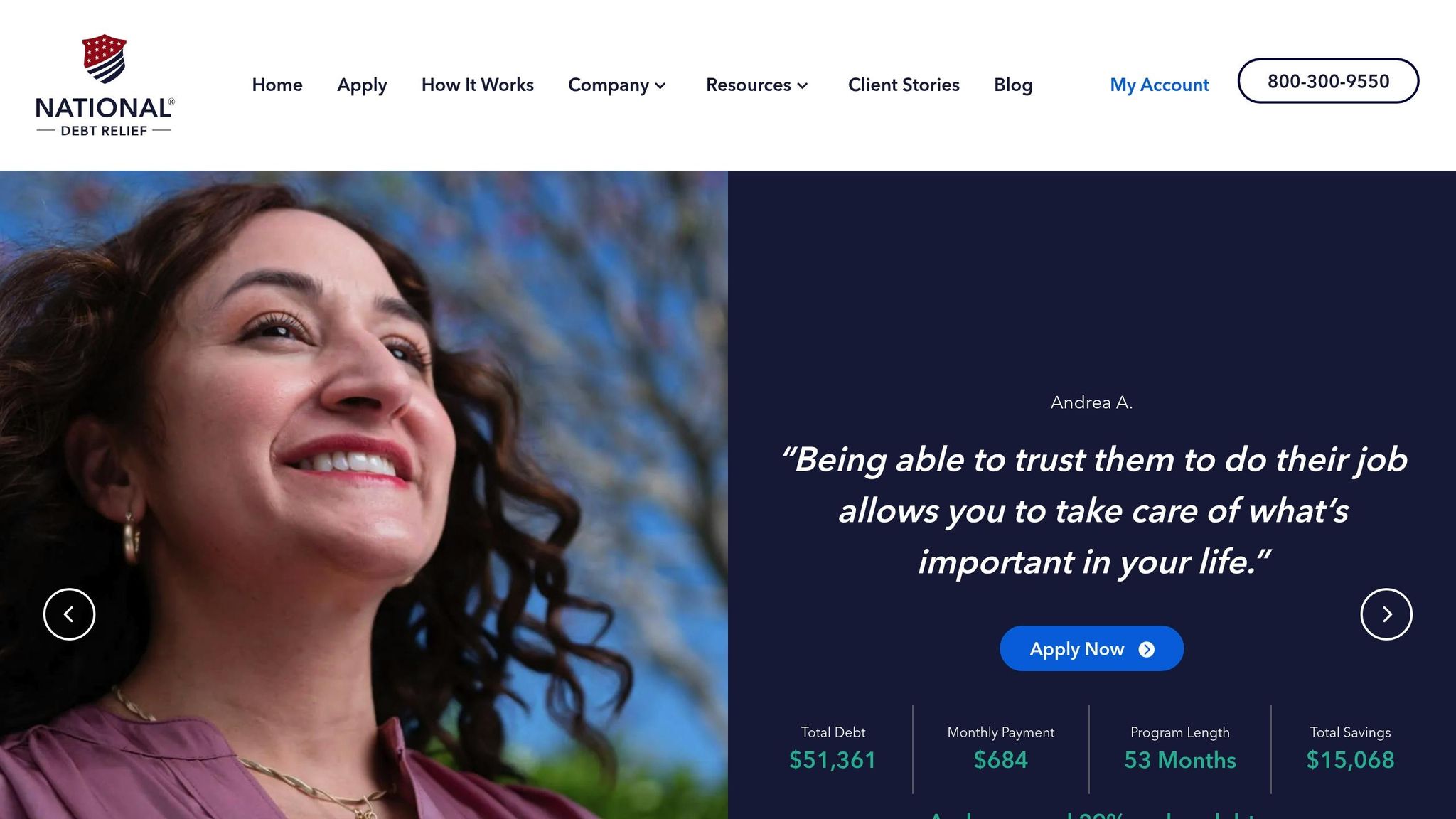
How National Debt Relief Works
National Debt Relief helps reduce unsecured debt by negotiating directly with creditors. Knowing how this process works can help you decide if their services fit your financial needs and goals.
The Debt Settlement Process
It all starts with a free consultation where your debts, income, and expenses are reviewed to see if you qualify for the program.
Once enrolled, you stop making payments to your creditors and instead deposit money into a dedicated account that you control. These funds are set aside for future settlements. Over time, as your account balance grows and your debts go unpaid, the negotiation team contacts your creditors to propose settlement offers. The goal is to agree on a reduced payoff amount, but outcomes depend on factors like your financial situation and creditor policies.
This process can take years, depending on how much debt you owe and how quickly you can save. During this time, your credit score will likely take a hit due to missed payments, and creditors may continue to contact you or even take legal action.
Now, let’s look at who can qualify for these services.
Who Qualifies for Their Services
National Debt Relief has specific requirements for eligibility. First, you need to have a minimum amount of unsecured debt to make the program worthwhile, considering its duration and impact on your credit. They handle unsecured debts like credit card balances, personal loans, medical bills, and some business debts. However, they don’t assist with secured debts such as mortgages, car loans, student loans, or taxes.
Beyond debt type, you must show genuine financial hardship – examples include job loss, medical issues, or a major drop in income. Simply wanting to pay less on your debts isn’t enough to qualify. Additionally, you’ll need to prove you can consistently make monthly deposits into your settlement account. The company reviews your income and expenses to confirm you can maintain these payments throughout the program.
Fees and Costs
National Debt Relief only charges fees after successfully settling a debt, following Federal Trade Commission rules that prohibit upfront fees for debt settlement services.
The fee is a percentage of the total enrolled debt and is based on the original balance, not the reduced settlement amount. The exact percentage depends on factors like your total debt, the complexity of your case, and the terms negotiated. Over time, these fees can add up to a significant amount.
There are other potential costs to consider. For instance, forgiven debt might be considered taxable income by the IRS, which could lead to additional tax bills. You might also need legal assistance if creditors take action against you.
The company discloses fees upfront, but the total cost becomes clearer as settlements are finalized. It’s important to weigh these expenses against the potential benefits of debt reduction and the program’s impact on your credit.
Is National Debt Relief Legitimate?
To determine the legitimacy of National Debt Relief, we’ve focused on real customer feedback, industry credentials, and their business practices. As one of the leading debt settlement companies, understanding its reputation requires diving into these key areas.
Customer Reviews and Experiences
Feedback from customers about National Debt Relief paints a mixed picture. While some clients praise the service for helping them manage overwhelming debt, others highlight challenges such as extended settlement timelines, ongoing contact from creditors during the process, and the impact on their credit scores. Communication issues during critical moments have also been noted by some users, adding to the varied experiences.
Industry Ratings and Accreditations
National Debt Relief holds accreditation from the Better Business Bureau (BBB), where it has actively addressed customer complaints. The company operates in compliance with debt settlement regulations and is authorized to provide services in states where such programs are allowed. Reviews on various platforms reveal a broad spectrum of experiences – some customers appreciate the support they received, while others caution about the risks involved in debt settlement programs, including financial and credit-related consequences.
Company Transparency and Communication
National Debt Relief offers detailed online disclosures about the risks, timelines, and terms of its services. Their fee structure and cancellation policies are clearly outlined in written agreements. However, some customers feel that initial consultations don’t always emphasize crucial risks, such as potential credit score impacts or the chance of continued creditor actions.
The company provides online account updates and assigns dedicated representatives to clients, though the consistency of communication varies. While many concerns are addressed through their complaint resolution process, overall customer satisfaction remains inconsistent, reflecting a range of individual experiences.
Problems and Warning Signs
National Debt Relief has made a name for itself in the debt relief industry, but there are several concerns – based on customer feedback and industry insights – that potential clients should think about before signing up.
Common Customer Complaints
- Longer-than-expected settlement timelines: Many clients find that the settlement process drags on much longer than anticipated. During this time, they may still need to make regular payments while also dealing with ongoing creditor actions.
- Credit score damage: It’s common for clients to see their credit scores drop during the settlement process. This can impact their ability to get approved for loans, rental agreements, or other financial opportunities in the future.
- Inconsistent customer service: Some customers report difficulties in reaching their assigned representatives, which can leave them feeling unsupported during critical stages of the program.
- Creditor harassment: Even after enrolling in a settlement program, creditors may continue to contact clients, adding unnecessary stress to an already tense situation.
- Tax surprises: Settled debts can sometimes result in unexpected tax obligations, as forgiven debt may be considered taxable income.
These challenges highlight the importance of thoroughly researching and evaluating the program before committing.
Red Flags to Watch For
- High-pressure sales tactics: If you feel rushed or pushed to sign up immediately, take a step back. Legitimate companies should provide clear, detailed information about risks and encourage you to take your time and consult with a financial advisor.
- Upfront fees: Federal law prohibits debt settlement companies from charging fees before they’ve successfully reduced or settled your debt. If a company asks for payment upfront, it’s a major red flag.
- Overpromising results: Be skeptical of guarantees that all your debts can be eliminated or promises of specific settlement outcomes. Debt negotiations depend on individual circumstances, and no company can legally guarantee results.
- No written agreements: Reputable companies provide clear, written contracts that outline their fees, services, timelines, and cancellation policies. If these details are missing, it could signal a lack of transparency.
- Pressure to ignore creditors: While some companies may advise redirecting creditor calls, any insistence on cutting off communication entirely – without proper explanation – should raise concerns.
- Lack of regulatory disclosures: Trustworthy companies will provide full disclosures about program risks, timelines, potential outcomes, and fees. If this information is incomplete or missing, it may indicate non-compliance with industry standards.
- Unreasonable cancellation policies: Watch out for companies that impose steep cancellation fees, require long notice periods, or refuse to refund unused deposit funds. A fair and transparent cancellation policy is a hallmark of a reliable program.
Paying attention to these warning signs can help you make a more informed decision and avoid unnecessary risks.
sbb-itb-2a9374f
National Debt Relief: Pros and Cons
National Debt Relief comes with both benefits and drawbacks. Whether it’s the right choice depends on your financial situation, the types of debt you have, and your comfort with potential risks.
Comparison Table
| Advantages | Disadvantages |
|---|---|
| Recognized in the Industry: Accredited by respected consumer organizations | Credit Score Effects: Debt settlement can lower your credit score temporarily |
| No Upfront Costs: Charges fees only after successfully settling debts, as per federal guidelines | Limited Debt Coverage: Only handles unsecured debts like credit cards and personal loans; excludes secured debts and student loans |
| Experienced Professionals: Staffed by a skilled team with years of experience | Time-Intensive: The process can take a significant amount of time to complete |
| Free Initial Consultation: Offers an assessment at no cost | Creditor Communication: Creditors may still contact you during the program |
| Consistent Updates: Keeps clients informed about progress and account status | Tax Consequences: Forgiven debt may be considered taxable income |
| Flexible Payment Options: Allows manageable monthly contributions to the settlement fund | Eligibility Requirements: Requires proof of financial hardship and consistent payments |
| Dedicated Support: Provides personalized help through assigned account representatives | No Guaranteed Results: Success depends on factors like creditor cooperation |
| Satisfaction Guarantee: Includes a trial period for new clients | Legal Risks: Creditors may pursue legal action during the settlement period |
This table highlights the core points, but let’s dive deeper into the details.
One of the biggest strengths of National Debt Relief is its adherence to federal rules and its transparent fee structure. Charging fees only after successfully settling debts shows a commitment to fairness. Plus, with a seasoned team of negotiators, the service often achieves better deals with major creditors.
On the downside, the program can negatively impact your credit score, at least temporarily, and the settlement process isn’t quick – it requires patience and consistent payments over time. For those juggling different types of debt, the program’s focus on unsecured debts might leave gaps, meaning additional solutions could be necessary.
It’s also important to remember that any forgiven debt may be taxed as income, and eligibility is limited to those who can prove financial hardship. While these challenges are real, National Debt Relief can still be a viable option for those who are prepared for a long-term commitment and can handle the temporary credit score dip.
How to Check if a Debt Relief Service is Legitimate
When it comes to debt relief services, knowing how to verify their legitimacy is essential. With so many options out there, it’s important to separate trustworthy services from potential scams. Here’s how you can confirm whether a service is as reliable as it claims to be.
Steps to Verify Legitimacy
Look into Better Business Bureau (BBB) ratings. The BBB is a go-to resource for assessing a company’s reputation. Focus on companies with an A+ rating and BBB accreditation. These ratings are based on public reviews, complaints, and other business data. For example, National Debt Relief holds an A+ rating and is BBB-accredited.
Check for industry accreditations and memberships. Reputable debt relief companies often belong to respected organizations. Look for affiliations with groups like the American Association for Debt Resolution (AADR) or the Association for Consumer Debt Relief (ACDR).
Ensure debt specialists have proper certifications. Certifications from organizations like the International Association of Professional Debt Arbitrators (IAPDA) indicate that specialists are trained to handle debt relief effectively.
Read reviews on independent platforms. Don’t just rely on testimonials from the company’s website. Check independent review platforms like Trustpilot and ConsumerAffairs. For instance, National Debt Relief boasts a 4.7-star rating from over 41,000 reviews on Trustpilot and a 4.9-star rating from over 56,000 reviews on ConsumerAffairs.
Contact your state Attorney General or consumer protection agency. Ask if there are any complaints or legal actions against the company. This can provide critical insights into their track record.
Search the Federal Trade Commission (FTC) website. The FTC frequently takes action against fraudulent companies. Their site can reveal any enforcement actions or warnings about the service you’re considering.
Verify licensing. Legitimate companies are properly licensed in the states where they operate. Confirm their licensing status through your state’s Attorney General’s office or department of consumer affairs.
Look for clear evidence of success. Reliable companies are transparent about their settlement rates, average savings, and timelines. Be cautious if the company only showcases reviews on its own website or has a history of complaints about unmet promises.
By following these steps, you can confidently identify a service that aligns with your financial needs.
Example of a Transparent Debt Relief Process
A trustworthy debt relief service will outline its process in a clear and straightforward way. Steps To Be Debt Free provides a great example of what to expect from a legitimate service.
The process typically begins with a free, no-pressure consultation. During this session, certified debt specialists review your financial details, including debts, income, and expenses. This initial assessment helps create a personalized debt relief strategy tailored to your situation. The strategy will outline the steps involved, potential savings, timelines, and any impact on your credit.
Reputable companies also provide written details of their fees, which are only charged after successful settlements. They never ask for upfront payments.
Throughout the process, you should receive regular updates on your progress. This includes reports on creditor negotiations, settlement fund balances, and any new developments. Clear communication ensures you’re always informed.
Finally, legitimate companies back their services with proper licensing and accreditations. Their staff members are certified and trained in debt relief best practices, ensuring you’re working with professionals who understand the legal and financial aspects of your situation.
Conclusion: Making the Right Choice
Picking the right debt relief service requires thorough research and a clear understanding of the risks tied to both scams and legitimate services. Unfortunately, the debt relief industry is a magnet for scammers who lure consumers with false promises of wiping out debt in exchange for hefty upfront fees. These fraudulent companies often leave people in even worse financial trouble than when they started.
Even legitimate debt settlement services come with their own set of challenges. Risks include severe credit score damage, potential lawsuits or wage garnishments from creditors, high fees, and taxable income on forgiven debt. Federal regulations prohibit for-profit debt relief companies from charging upfront fees before successfully settling or reducing your debt. Any company demanding payment in advance should raise red flags. Always insist on written agreements outlining clear terms, fees, and potential outcomes.
To protect yourself, rely on more than just a provider’s marketing materials. Verify claims through independent sources like the Better Business Bureau or your state attorney general’s office. Ask detailed questions about fees, timelines, and how the process might impact your credit. It’s also worth exploring other options, such as non-profit credit counseling or bankruptcy, which might offer stronger legal protections.
Be cautious of any company that guarantees unrealistic outcomes or pressures you into quick decisions. No debt relief service can promise to eliminate all your debts without consequences. The key is to take your time, conduct thorough research, and ensure that all agreements are clear and in writing.
FAQs
Will enrolling in a debt relief program like National Debt Relief hurt my credit score?
Enrolling in a debt relief program, like National Debt Relief, can hurt your credit score. These programs often require you to stop making payments to your creditors. As a result, late fees, penalty interest, and missed payments may be reported to credit bureaus.
When your debts are settled, they’re usually noted on your credit report as “settled for less than the full balance.” This mark can stay on your report for up to seven years. Many people see their credit score drop significantly – sometimes by 100 to 200 points or more. While this drop isn’t permanent and you can rebuild your credit over time, it’s crucial to carefully consider these potential consequences before deciding if debt relief is the right path for you.
What other options do I have if I’m unsure about using National Debt Relief?
If you’re unsure about using National Debt Relief, there are other paths you can take to address your financial situation. One option is to handle your debt independently. This involves creating a detailed budget and reaching out to creditors to negotiate payment terms directly.
Another avenue is nonprofit credit counseling. Certified counselors can assist you in crafting a tailored plan to manage and reduce your debts. For more serious financial struggles, you might explore debt consolidation loans or even consider bankruptcy, depending on the severity of your circumstances.
Each of these approaches comes with its own set of advantages and drawbacks. It’s essential to evaluate your options carefully and choose what aligns best with your financial goals. Take the time to do thorough research and seek advice from trusted professionals to avoid potential scams or added financial strain.
How can I make sure a debt relief company is legitimate before signing up?
To verify the legitimacy of a debt relief company, steer clear of those that contact you unexpectedly or demand upfront payments. Genuine companies will only charge fees once they’ve successfully helped reduce your debt.
Check for certifications from trusted organizations like the National Foundation for Credit Counseling (NFCC) or the Financial Counseling Association of America (FCAA). These certifications show the company follows recognized industry standards.
It’s also a good idea to look up the company on the Better Business Bureau (BBB) website. This can help you spot any complaints or low ratings. Reading customer reviews and testimonials can give you a clearer picture of the company’s track record. Take your time, explore your options, and trust your instincts – if something doesn’t feel right, it’s worth reconsidering.
