
Want to pay off debt faster? Start by decluttering your digital life. Constant app notifications, forgotten subscriptions, and impulse-buy triggers on your phone might be silently draining your wallet. Here’s how digital minimalism can help:
- Cut distractions: Unsubscribe from promo emails, disable shopping app alerts, and reorganize your home screen to reduce temptations.
- Cancel unused subscriptions: 42% of people waste money on services they don’t use. Redirect that money toward debt payments.
- Simplify tools: Use one budgeting app to track spending and manage payments instead of juggling multiple platforms.
- Automate payments: Set up automatic transfers to avoid late fees and focus on reducing debt faster.
- Pause impulse buys: Adopt a 48-hour rule before making unplanned purchases.
How Minimalism Helped Me Pay off $21,000 of Debt
The Problem: Digital Clutter Makes Credit Card Debt Worse
Digital clutter doesn’t just crowd your devices – it can drain your wallet, too. Every app alert, email, and notification creates an environment ripe for overspending. 30% of people in credit card debt point to impulse purchases as one of their biggest financial regrets. On top of that, 52% of Americans admit to making impulsive credit card purchases at least every few months.
This connection between digital chaos and mounting debt isn’t random. Juggling multiple financial apps and tools often clouds your financial picture. Nearly a quarter of consumers (24%) find a "forgotten" subscription or recurring payment on their statement at least once a month. That’s money slipping through the cracks – money that could instead be used to tackle debt. This loss of control shows up in two ways: impulsive spending and disorganized financial management.
How Digital Overload Fuels Impulse Spending
Social media platforms have made it easier than ever to spend on a whim. With targeted ads seamlessly integrated into your feed, there’s no time to pause and reflect before moving from "I want that" to "I bought that".
Promotional emails only add fuel to the fire, with "limited-time offers" designed to pressure you into unplanned spending. Financial expert Kiara Taylor highlights how this constant stream of digital clutter contributes to decision fatigue. When you’re mentally drained, it’s harder to resist swiping your credit card for yet another purchase.
The statistics are telling: 50% of Americans admit they spend more when using credit cards compared to cash or debit. And 75% believe credit card rewards programs encourage overspending. Every ad, email, and notification is carefully crafted to exploit these tendencies. But impulse buys aren’t the only problem – digital clutter also disrupts your ability to manage your finances effectively.
Why Too Many Financial Apps Complicate Debt Management
It might seem logical to download multiple financial apps to stay organized, but the reality is often the opposite. When your financial information is scattered across different platforms, you’re left with information overload. Instead of gaining clarity, you lose sight of how much you owe or how much you can safely spend.
This fragmentation has serious consequences. Constant notifications from various apps create mental stress, making it harder to take essential financial actions, like paying bills on time. This disorganization can lead to missed payments, late fees, and overspending. In fact, 42% of people pay for subscriptions or digital services they don’t even use – simply because tracking them across multiple apps feels overwhelming.
The solution? Simplify. Consolidating your financial tools into one platform can help you regain control. By adopting a minimalist approach to your digital finances, you’ll have a clearer view of your money, making it easier to manage debt and avoid unnecessary expenses. Streamlining is key to cutting through the noise and taking charge of your financial future.
The Solution: Use Digital Minimalism to Manage Debt Better
Digital minimalism simplifies the chaos of managing debt by focusing on tools that genuinely help you stay on track. It’s not about rejecting technology but about using only what serves your financial goals.
The idea is straightforward: cut the clutter, keep what works, and ditch the rest. When you streamline your digital financial life, you reduce the distractions that often lead to overspending. Fewer apps mean fewer decisions, which helps prevent decision fatigue. As Dominique Phongsavath from Fort Worth City Credit Union explains:
"Minimalism isn’t about depriving yourself. It’s about creating space (financially and mentally) for what truly matters to you."
This mental clarity is key when tackling debt. By reducing distractions and consolidating tools, you’re better equipped to stick to your budget. Fewer digital temptations mean more focus on paying down what you owe, creating a smoother path toward financial freedom.
Simplify Your Digital Financial Tools
Managing multiple apps and accounts can quickly become overwhelming. Instead, consolidate your financial tools into one platform that handles everything – budgeting, bill tracking, expense monitoring, savings, and even investments. This approach not only reduces clutter but also makes it easier to keep tabs on your money and avoid hidden fees.
Automation is another great way to lighten the load. Set up automatic payments for debts and recurring transfers for savings. With these processes running in the background, you can focus on your larger financial goals without worrying about missing deadlines.
Once your tools are streamlined, the next step is to tackle the triggers that encourage unnecessary spending.
Remove Digital Triggers That Cause Impulse Spending
Our devices are full of sneaky triggers that nudge us toward spending. Social media ads, retail apps, and promotional emails are all designed to grab your attention and turn it into purchases. This constant exposure can lead to impulse buying, derailing your efforts to manage debt.
Start by unsubscribing from promotional emails to cut down on spending temptations. The FTC’s "Click to Cancel" rule, introduced in October 2024, now makes it easier to opt out of services that were previously hard to cancel.
Next, disable unnecessary push notifications from shopping and social apps. These alerts not only create stress but also make it harder to resist impulse buys. As Cheyanne Solis, a copywriter with expertise in digital minimalism, puts it:
"A digital minimalism practice is about being in conscious control of your technology and how much attention you allow it to ask of you."
Turning off these notifications helps create a calmer digital space. Another simple trick is to reorganize your phone’s home screen. Move shopping apps and social media into folders or secondary screens. This small barrier can make you think twice before opening them out of habit.
Finally, try adopting a 48-hour rule for unplanned purchases. If something catches your eye online, add it to your cart but wait two days before buying. This pause gives you time to decide if the purchase aligns with your debt-reduction goals. You can also limit your time on social commerce platforms by using app timers, which reduce exposure to targeted ads and sponsored content. By removing these distractions, you can stay focused on what really matters – paying off your debt.
sbb-itb-2a9374f
5 Steps to Combine Digital Minimalism With Debt Relief
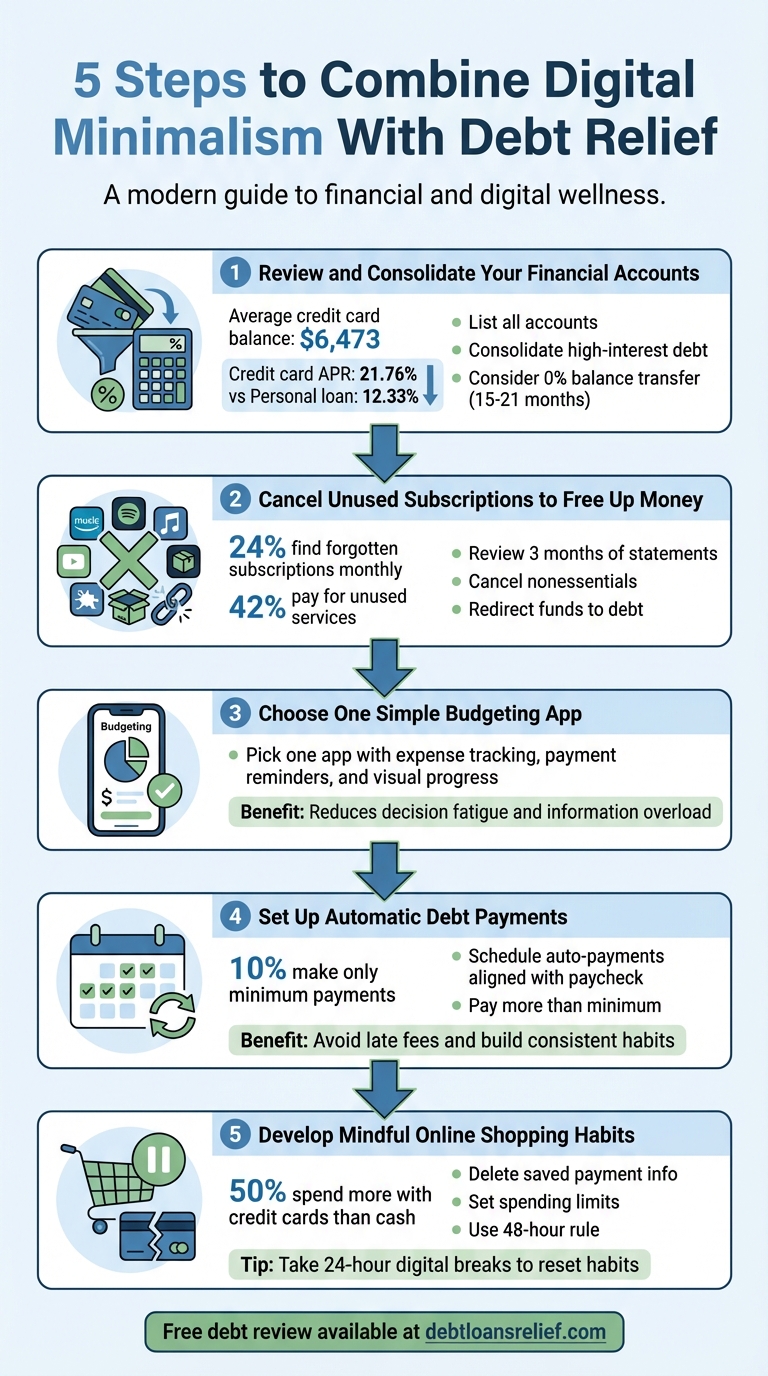
5 Steps to Combine Digital Minimalism With Debt Relief
Now that you see how digital minimalism can play a role in tackling debt, it’s time to take action. These five steps will help you streamline your financial life while staying focused on repayment.
Step 1: Review and Consolidate Your Financial Accounts
Start by listing all your credit cards, loans, and banking apps. For each account, note the balance, interest rate, and due date. To give you an idea, the average American credit card balance was $6,473 as of June 2025, with total credit card debt hitting a record $1.21 trillion earlier that year. Once you have a clear picture, look for ways to simplify. Consolidating high-interest credit cards into one monthly payment can save you thousands in interest and reduce stress. For example, personal loans average 12.33% interest – far lower than the 21.76% average on credit cards.
If your credit score is solid, consider a 0% balance transfer card, which typically offers 15 to 21 months of no interest. This allows you to focus solely on paying down the principal. As NerdWallet puts it:
"Consolidation reveals a light at the end of the tunnel. If you take out a debt consolidation loan with a three-year term, you know your debt will be repaid in three years."
To stay on track, remove unnecessary banking apps from your phone. If you need help assessing your debt, Steps To Be Debt Free offers free reviews at https://debtloansrelief.com.
Step 2: Cancel Unused Subscriptions to Free Up Money
Recurring subscriptions can quietly eat away at your budget. Go through your last three months of bank and credit card statements to spot any forgotten charges. Research shows that 24% of Americans find a subscription they’ve forgotten about at least once a month.
Divide your spending into "essential" and "nonessential" categories – streaming services, app memberships, and subscription boxes often fall under "wants". Cancel anything that doesn’t align with your financial priorities. You can always re-subscribe later once you’ve made progress on your debt. Redirecting these funds to repayment speeds up your journey to financial freedom.
Step 3: Choose One Simple Budgeting App
Managing finances doesn’t have to mean juggling multiple apps. Pick one straightforward budgeting tool that tracks your spending, monitors debt payments, and gives you a clear overview of your finances. Centralizing your financial information reduces stress and keeps things manageable.
Look for features like automatic expense categorization, payment reminders, and visual progress reports. Seeing your debt shrink through charts and graphs can be incredibly motivating. As Fort Worth City Credit Union explains:
"Minimalism isn’t just about decluttering your closet, it can transform your financial wellness."
Once you’ve chosen your app, delete other financial tools from your phone. This minimalist approach reduces decision fatigue and keeps you focused. Use the app to set up alerts for due dates and monitor your progress, whether you prefer the Snowball method (starting with smaller balances) or the Avalanche method (targeting high-interest debt).
Step 4: Set Up Automatic Debt Payments
Automation eliminates the hassle of remembering due dates and ensures you never miss a payment. Late payments can lead to fees and increased interest, making it harder to pay off debt.
Log into each account and schedule automatic payments for at least the minimum due. Align payment dates with your paycheck schedule so funds are available when needed. If you can, pay more than the minimum to speed up repayment. Automation reduces the need to check multiple apps throughout the month, saving time and mental energy.
Keep in mind that about 10% of credit card users made only the minimum payment in early 2025. While this avoids late fees, it extends repayment time and increases overall interest costs. Automating payments helps build consistent habits that support long-term debt relief.
Step 5: Develop Mindful Online Shopping Habits
Online shopping makes impulse purchases all too easy, especially when your credit card details are saved on multiple sites. Delete stored payment information from shopping apps and websites. This extra step forces you to pause and consider whether a purchase aligns with your financial goals.
Set clear limits for discretionary spending, and before buying, ask yourself if the item is truly necessary. Use your budgeting app to track online spending, and adjust if you notice overspending. Taking a "digital Sabbath" (a 24-hour break from screens) can also help reset your habits and reduce spending triggers. As journalist and author Catherine Price notes:
"Regular breaks can be an effective way to rebalance your body’s chemistry and regain your sense of control."
It’s worth noting that half of Americans admit they spend more using credit cards than they would with cash or debit. By cultivating mindful shopping habits, you can break this cycle and stay focused on your debt-reduction goals.
Results: Reach Debt Freedom Through Digital Minimalism
Digital minimalism helps you clear out unnecessary clutter and redirect funds toward tackling debt. By canceling unused subscriptions, cutting back on excessive apps, and avoiding constant promotional temptations, you can allocate more money to paying off credit card balances. Interestingly, studies reveal that 42% of consumers continue paying for digital services and subscriptions they no longer use.
This approach doesn’t just benefit your wallet – it also eases your mental load. Simplifying your digital life reduces decision fatigue, which can help with the financial stress that 88% of adults report experiencing. As Patrick Huey, CFP, wisely notes:
"If being debt-free helps you sleep better and makes you more confident about your future, it’s worth it."
By embracing digital minimalism, you can focus on what truly matters. It not only helps curb spending triggers and strengthens financial discipline but also reduces the anxiety tied to debt.
These combined benefits create a clear and manageable route to financial freedom. For those seeking a structured starting point, Steps To Be Debt Free provides a free debt review at https://debtloansrelief.com. By prioritizing essential digital tools, you can gain a better understanding of your debt and follow a practical plan to regain control of your finances.
FAQs
How does digital minimalism help with managing credit card debt?
Digital minimalism – simplifying your online habits – can actually make managing credit card debt less overwhelming. By cutting through the digital clutter, you might uncover hidden expenses like unused subscriptions, app-based services, or recurring charges. Canceling these unnecessary costs can free up extra cash to put toward paying down your debt. Plus, limiting time spent on social media or shopping apps can help reduce those tempting impulse buys, giving you better control over your spending.
A more simplified digital routine can also make managing your finances easier. For instance, consolidating multiple accounts, sticking to one budgeting app, and setting up automatic bill payments can lighten the mental load of juggling due dates and tracking expenses. With fewer distractions and a more disciplined approach to budgeting, you’ll have the focus and cash flow needed to tackle high-interest balances and work toward financial independence.
How can I reduce digital clutter to better manage my finances?
To tackle digital clutter, start by figuring out what’s causing you the most stress. Is it a messy inbox, too many unused apps, nonstop notifications, or an overflowing photo library? Pinpoint the area that feels the most overwhelming and focus your attention there.
Once you know what needs attention, take small, manageable steps to address it. For example, unsubscribe from newsletters you never read, delete apps you don’t use, turn off unnecessary notifications, or sort through and organize your files. Spend just 10–15 minutes on this process, and make it a weekly habit. Keeping your digital space tidy can help you concentrate on what truly matters – like staying on top of your financial priorities, such as managing credit card debt.
How does simplifying financial apps help with managing debt?
Managing debt becomes much simpler when you consolidate your financial apps into a single platform. Trying to keep up with various tools – like budgeting apps, credit card portals, and subscription trackers – can lead to missed payments, overlooked charges, or confusion about due dates. Bringing all of these into one dashboard minimizes mistakes, helps you avoid late fees, and gives you an up-to-date, comprehensive view of your finances.
This streamlined approach also allows you to focus on important debt-reduction strategies. For example, you can easily identify high-interest balances and develop a repayment plan that works for you. Plus, with fewer apps and notifications cluttering your routine, spotting unnecessary expenses – like forgotten subscriptions – becomes much easier. Cutting out those extra costs can free up cash, accelerating your journey to becoming debt-free while encouraging healthier financial habits for the long run.
